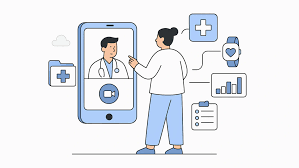
 Every day, millions of people face a paradox that defines modern healthcare: in an age where we can order food, transportation, and entertainment with a few taps on our phones, finding the right doctor in our neighborhood remains surprisingly difficult. This invisible problem has been quietly undermining healthcare accessibility for years, creating barriers that often go unnoticed until we desperately need medical care.
The challenge isn’t just about finding any doctor—it’s about finding the right doctor who accepts your insurance, specializes in your condition, has availability, and happens to be conveniently located. Traditional healthcare discovery methods force patients into a frustrating cycle of phone calls, insurance verification, and geographical guesswork that can delay critical care for weeks or even months.
The Geography of Healthcare Access
Healthcare access has always been inherently local. A world-renowned specialist in another state might as well be on another planet when you’re dealing with an urgent medical concern. The reality is that most healthcare decisions are influenced by proximity, insurance networks, and local availability—factors that create an incredibly complex puzzle for patients to solve.
This complexity becomes even more pronounced in diverse metropolitan areas where healthcare options are abundant but poorly organized. Patients often find themselves choosing between convenience and quality, or worse, delaying care because the process of finding appropriate local providers feels overwhelming.
The problem extends beyond individual inconvenience. When patients can’t efficiently connect with local healthcare providers, it creates system-wide inefficiencies. Emergency rooms become overwhelmed with cases that could have been handled by primary care physicians, specialists remain underutilized while patients wait months for appointments, and healthcare resources become misallocated across communities.
Technology Meets Local Healthcare Needs
While healthcare has been slow to embrace technological innovation compared to other industries, the emergence of location-intelligent healthcare platforms represents a significant breakthrough. These platforms understand that healthcare is fundamentally a local service and that matching patients with providers requires sophisticated geographic and network-based algorithms.
Vosita.com represents a prime example of how technology can address healthcare’s location-based challenges. By focusing on the geographic component of healthcare matching, such platforms create a more intuitive way for patients to discover medical professionals in their immediate area who can address their specific needs.
The innovation lies not just in displaying locations on a map, but in understanding the complex relationships between patient needs, provider capabilities, insurance networks, and geographic accessibility. This approach recognizes that healthcare decisions are rarely made in isolation from location-based considerations.
Beyond Simple Directory Listings
Traditional healthcare directories often function like digital phone books—static, hard to navigate, and lacking the context that patients need to make informed decisions. The next generation of healthcare discovery platforms takes a fundamentally different approach, treating provider-patient matching as a dynamic, multifaceted challenge that requires sophisticated solution architecture.
Modern healthcare platforms understand that patients need more than basic contact information. They need insights into provider availability, specialization areas, patient satisfaction metrics, and integration with their existing healthcare network. Most importantly, they need this information presented in a way that makes geographic accessibility a central consideration rather than an afterthought.
The transformation becomes apparent when patients can seamlessly find specialists who not only treat their condition but also operate within their insurance network and maintain offices within a reasonable distance from their home or workplace. This seemingly simple capability represents a complex technical and logistical achievement that addresses multiple healthcare access barriers simultaneously.
The Ripple Effects of Improved Healthcare Discovery
When healthcare discovery becomes more efficient, the benefits extend far beyond individual patient convenience. Healthcare providers gain access to patients who previously couldn’t find them, leading to better utilization of medical resources and reduced wait times across the system. Insurance networks operate more efficiently when patients can easily identify in-network providers, reducing administrative overhead and improving cost management.
Communities benefit as well. Better healthcare discovery tools help ensure that medical resources are distributed more evenly across geographic areas, reducing healthcare deserts and improving overall community health outcomes. Local economies strengthen when residents can access quality healthcare without traveling long distances, keeping healthcare spending within the community.
The data insights generated by sophisticated healthcare discovery platforms also provide valuable information for healthcare policy and planning. Understanding how patients search for and select healthcare providers offers crucial insights for improving healthcare accessibility and addressing service gaps in specific geographic areas.
The Future of Location-Based Healthcare
As healthcare continues to evolve, the importance of location-based provider discovery will only increase. Telemedicine has expanded access to certain types of care, but most healthcare services still require physical presence and local availability. The platforms that succeed in this environment will be those that best understand and solve the complex puzzle of matching patient needs with local provider capabilities.
The most successful healthcare discovery platforms will likely be those that combine sophisticated geographic intelligence with deep understanding of healthcare networks, patient preferences, and provider capabilities. They will need to balance comprehensiveness with simplicity, ensuring that powerful matching algorithms translate into intuitive user experiences that actually help patients access care more efficiently.
The invisible problem of healthcare discovery is finally receiving the technological attention it deserves. As platforms like Vosita continue to refine their approaches to location-based healthcare matching, patients can expect healthcare access to become less about luck and persistence and more about intelligent, efficient connections that prioritize both medical appropriateness and geographic accessibility.
This transformation represents more than technological progress—it’s a step toward healthcare equity, where a patient’s ability to find appropriate care depends less on their navigation skills and more on the quality of the tools designed to help them.
 Love 66 : le mystère aromatique préféré des amateurs JNR
 Veranda Avec Mur Plein : Idées Et Conseils
  Avis De Décès Duflos : Tout Savoir
 Ali Amar et les controverses entourant son journalisme
 Taqabal Allah Mina Wa Minkoum: Faith, Meaning, and Use